The Weight of Evidence: How Smithfield Turns Kilos Into Trust

At 4.35am the lorry is already waiting, engine idling, cab dark except for the glow of a phone. The driver is not looking at the meat. He is looking at a small box beside the gate: a screen, a printer, a steel plate set into the tarmac. The weighbridge is not the most romantic bit of Smithfield. It may, however, be the most important.
A market runs on many kinds of trust. Trust that the porter will handle a side properly. Trust that the buyer will pay. Trust that the inspector's stamp means what it says. But before any of that, there is a simpler question: what does it weigh? Get that wrong and every other number in the chain starts to wobble.
The first number of the day
The vehicle rolls forward. The plate gives slightly under the wheels. In the cabin, a screen settles on a figure, and a printer whirs out a ticket. Gross weight, tare, net. It is over in seconds, but the ticket is already doing work. It is a record, a receipt and, if necessary, a piece of evidence.
To a outsider, a weighbridge can look like a piece of municipal furniture. To the trade, it is closer to a referee. It does not care about reputation or banter or who has been in the market longest. It cares about load cells, calibration and the difference between a full tank and an empty one. Drivers know the ritual: approach slowly, stop cleanly, wait for the reading to settle. A rushed weigh is a bad weigh.
The weighbridge is the market's first editor. It cuts the story down to a number, and then everyone else argues about what that number means.
From lorry to rail
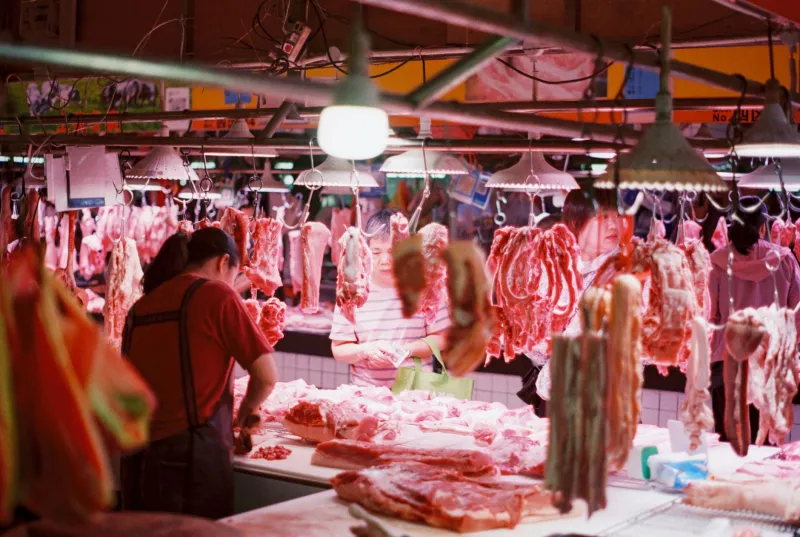
Inside, the meat has a different kind of weighing. Carcases hang on rails, and platform scales or rail scales take the individual weight. A porter hooks a side, steps back, and watches the display. The figure flickers, then holds. A ticket prints. The side moves on.
This is where the arithmetic becomes personal. A side of beef is not an abstraction. It has a shape, a fat cover, a shank, a rib, a lot of bone that will not end up on a plate. The scale does not judge any of that. It simply says: this is what the market is buying and selling.
And those figures add up. A few kilos on one carcase is a rounding error. A few kilos across a week's order is not. A restaurant buying twenty sides might see a three-kilo swing between one delivery and the next. At a wholesale price of £9 or £10 a kilo, that is £540 or more across the week, before anyone has trimmed a single steak. For a small kitchen working on tight margins, that is the difference between a comfortable week and a nervous one.
The arithmetic of a few kilos
The scale is only the start of the calculation. A chef also has to think about yield: fat trim, bone, shrinkage during ageing, cooking loss. The weight on the ticket is deadweight, not dinner. But it is the number on which the invoice is built, and so it becomes the anchor for every other decision. How many portions will this side give? What should go on the menu? What can be turned into stock, mince or staff meal?
This is why buyers care about weights in a way that can look obsessive from outside. They are not being fussy. They are doing the same thing a tailor does when measuring a customer: turning a physical thing into a set of numbers that can be planned around.
Digital scales have made the process faster and, in most cases, more accurate. They have also made it quieter. The old beam scales had a theatre to them: the arm swinging, the weights being moved, the moment of settlement. A trader could watch the process and see the logic. A modern display simply gives you the answer. That is progress, but it is not quite the same performance of proof.
The stamp and the argument
What has not changed is the need for an independent check. Weights and measures inspection is part of the market's plumbing. Stickers, seals and calibration records are not decoration. They are the reason a ticket can be trusted when a buyer and seller disagree.
The City of London Corporation has long had a hand in the regulation of market trading, and the language of weights and measures runs through the whole business. Inspectors can check scales. Traders can ask for a reweigh. A disputed ticket can be examined, and a reading can be repeated. The system is not designed to eliminate argument. It is designed to give the argument a fair starting point.
In the old days, that authority was often expressed through brass and ink: a stamp on a beam, a signature in a ledger, a ticket folded into a pocket. Today it is more likely to be a printed docket and a calibration sticker. The ritual has been streamlined, but the principle is the same. Somebody independent has said: this scale is honest.
What the scales cannot tell you
A weighbridge cannot tell you whether a carcase is good. It cannot tell you about breed, feed, ageing or the skill of the butcher who will break it down. It cannot tell you whether the buyer has a good eye or the chef has a good menu. It settles one question so that the other questions can be asked.
That is the practical edge of all this. Smithfield's weights and measures do not just shape the market's paperwork. They shape what London eats, because every restaurant price, every portion size and every menu decision begins with a number that was agreed at a scale. The weighbridge is where the city's meat bill starts to become real.
By seven, the rush has thinned. Tickets are in pockets. Lorries are pulling out. The screen in the cabin resets to zero, ready for the next load. The market will argue about quality, provenance and price for the rest of the day. But the weight of evidence has already been taken.