Ear to the Floor: Listening for the Time in Smithfield's Morning Chorus
You hear Smithfield before you see it. Coming up from Farringdon at half three, the streets are still doing their night-time impression of emptiness, and then there's a low, baggy noise hanging over the whole block, like a party three rooms away. That's the market, already half a shift in. By the time you get to the Grand Avenue, the sound has separated itself out into things you can name.
The building is the first instrument
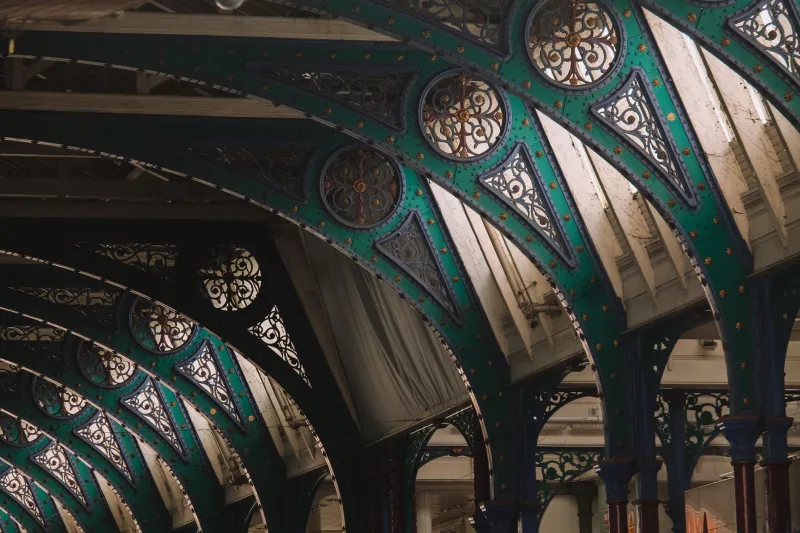
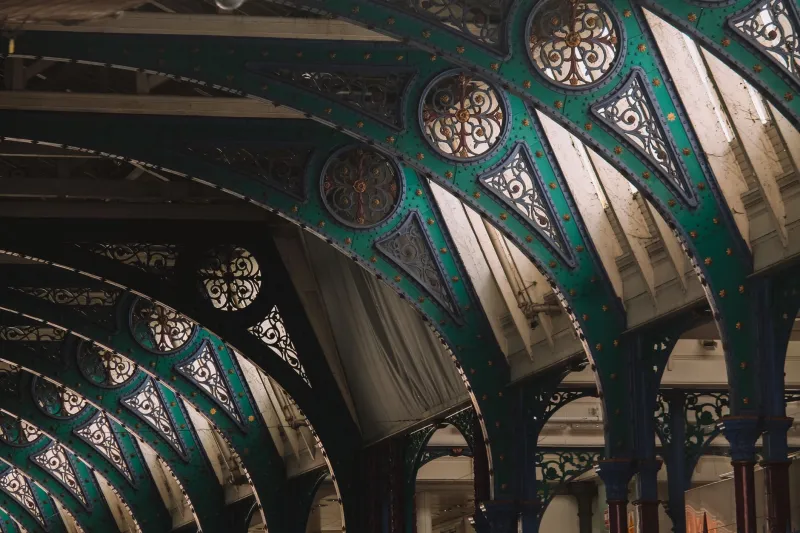
The old ironwork does most of the work. Glazed roofs, columns, hard floors and long straight aisles mean nothing stays where it's made. A crate put down at one end of the hall arrives at the other as a soft knock. A laugh travels further than the joke deserves. Regulars learn to read the room the way you'd read a weather map: dense sound over there means a busy stand, thin sound means a quiet morning, and an odd pocket of silence is usually somebody having a serious conversation.
That acoustic is why the market feels bigger than its footprint. It's also why nobody bothers shouting unless they mean it.
Radios, and what's tuned in
Walk the aisles and you're passing through a series of other people's listening habits. A stand playing talk radio. A stand on a soul station. Somebody with a phone propped against a crate, mid-podcast, volume just high enough to be company. Then, at twenty past five, one or two sets still switch over for the Shipping Forecast — Fisher, German Bight, all those sea areas read out in that flat, unhurried voice — and the floor goes momentarily strange, because a market built on land is briefly listening to the sea.
It's a small thing, but it tells you plenty. The radio habits map onto generations almost perfectly. The traders who've been here thirty years tend towards whatever was on in the van in 1994. The newer ones bring their own noise in on their phones and take it home again. Nobody's arguing about it. It's just how the shift sounds now.
Percussion: gates, tills, tail lifts
Underneath the voices is the rhythm section. Roller shutters going up. Tail lifts clanking down. The till, which in most stands is a phone now, but still makes a noise when a sale goes through. Trolley wheels with one bad castor, and you can hear which one it is from twenty feet.
The reversing alarm deserves its own paragraph. It's the market's metronome — the same three notes, over and over, from different corners, never quite in time with each other. Somebody once said you could set your watch by the first one and be wrong by about four minutes, which is roughly the margin the whole place runs on.
The hum that never stops
And then there's the drone: cold rooms, chillers, extractors, the constant low-grade hiss of machinery keeping several tonnes of meat at the right temperature. It's the sound nobody mentions because it's always there. Which is exactly why it matters. When a compressor changes pitch, heads turn. When one stops, somebody is already walking towards it.
New starters take a while to hear it. Old hands notice within seconds. That's an underrated part of trade knowledge — not knowing what a thing sounds like, but knowing what it sounds like when it's wrong.
What's missing from the mix
Here's the honest part. The floor is quieter than it used to be. Fewer voices, fewer stands, fewer of those long cross-market shouts where a nickname gets bellowed the length of an aisle and answered without anyone looking up. Some of that has moved to WhatsApp groups that ping at four in the morning. Some of it has simply gone, as volumes shift and the trade consolidates and the market's long-term future keeps being argued over in committee rooms a few streets away.
You notice it most around seven, when the City starts arriving in its own tidy way — coffee machines, bike bells, the click of a lanyard against a coat — and the market's own noise begins to lose the argument. By nine, the loudest thing in the building is often a floor polisher.
Telling the time without a clock
Ask anyone who works here and they'll do a decent impression of a market clock. Around three, gates and greetings. Four, the first proper clatter of the day. Half four, the banter sharpens because the coffee's worn off. Twenty past five, the forecast. Six, the cafés up the road start filling with people in whites and steel-toe boots. Seven, the trade thins, the City thickens, and the aisles stop being a workplace and start being a curiosity.
It's a schedule you can hear. That's the thing worth protecting, and it's not the sort of heritage that goes into a glass case. It's a sound that gets made fresh every morning by people doing a job — and the day it stops, nobody will need an archive to tell them the market's gone. They'll just notice the street has gone quiet.