The First Cut Is the Quiet One: A Smithfield Apprenticeship Begins Before Sunrise
At 04:40 on a wet Tuesday in November 2026, West Smithfield is not yet a market in the way most people imagine one. It is a set of sounds: a roller door, a reversing alarm, the clack of a trolley wheel finding a gap in the pavement. Inside, under lights that make everything look slightly too bright, an apprentice is learning how to stand still.
Her name is not important to the lesson. What matters is that she has been told, twice, not to fill the space. Her mentor — a butcher of thirty-odd years, the kind of man who can make a waterproof jacket look like formalwear — is watching a delivery come in. She is watching him watch it. This, it turns out, is the first skill.
The floor before the knife
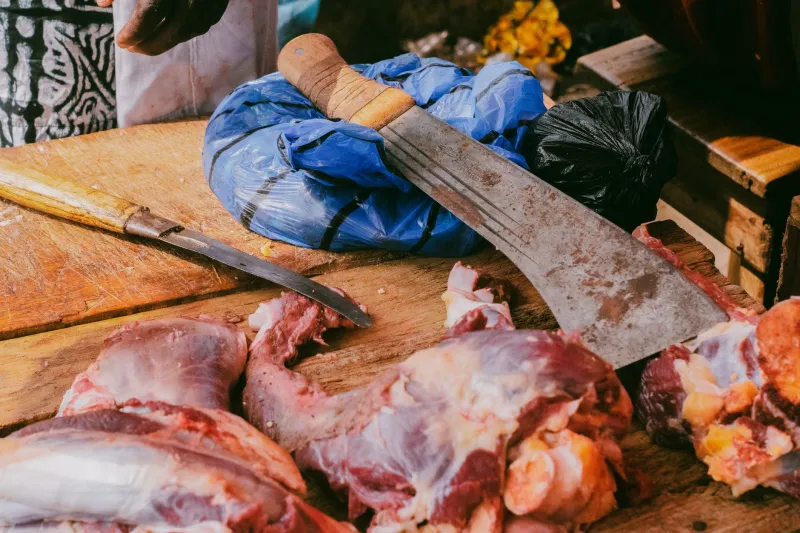
Most apprenticeships in butchery begin with the obvious things: knife safety, basic cuts, food hygiene, the difference between a seam and a saw. Smithfield adds another layer. Before you touch a blade in a serious way, you learn the floor. Which way the traffic runs. Where the pallets land. When a porter needs you out of the way and when a trader is simply thinking out loud. The market has its own choreography, and it does not stop for a newcomer with good intentions.
“You can teach someone to break down a lamb in a room,” her mentor says, not looking at her. “Out here, you teach them to do it without losing a finger or costing somebody money.”
The apprentice nods. She has a small notebook in her pocket, though she has already worked out that most of what she is learning will not go in it. The formal side of her training — the butchery apprenticeship standard, the online modules, the assessor visits — is real and necessary. But the market is where the theory gets tested against a cold morning, a tight aisle and a customer who wants a particular thing cut a particular way.
The carcass is the textbook
By 05:15, a side of beef is hanging in front of her and the lesson has turned anatomical. Not in a classroom way, with diagrams and arrows, but in a practical one. Her mentor points at a seam and asks her what she sees. She hesitates. He waits. This is not a trick; it is the method. Eventually she says the word “feather”, and he nods once, which from him is practically applause.
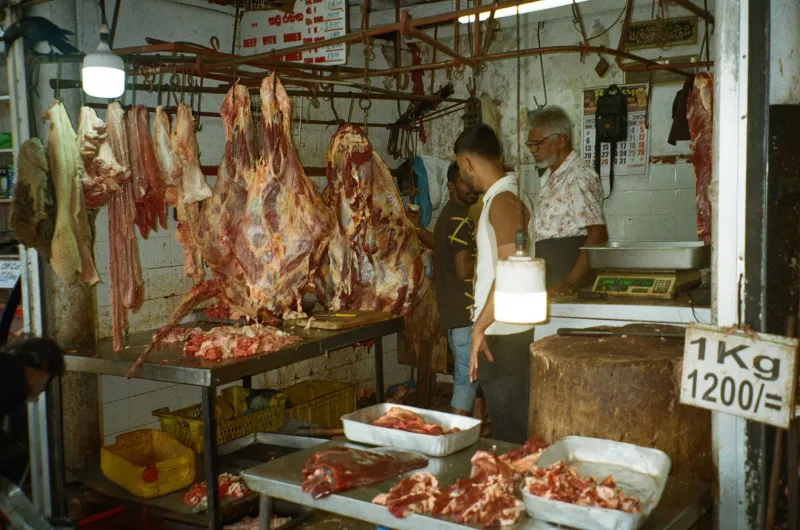
Smithfield has always taught through the carcass. You can read a whole trade in the way someone handles a side of beef: where they put their hand, how they judge the fat, whether they respect the weight of it. The apprentice is learning that a knife is only part of the job. The rest is knowledge held in the eyes and the fingertips — the colour of the fat, the set of the bone, the small differences that tell you where a cut came from and what it is good for.
It is slow work, and deliberately so. The market is not a cooking show. Nobody is rushing for a camera. The point is to make the same cut well, again and again, until the hand knows what the eye has already seen.
Etiquette is part of the trade
Around 06:00, the floor gets busier. This is when the apprentice learns the unwritten rules. Don’t stand in the doorway. Don’t ask a question mid-lift. Don’t touch another trader’s stock without being invited. Say good morning, but read the room first. If someone is carrying something heavy, you move. If someone is carrying something heavy and talking, you really move.
None of this is in the training handbook, though it probably should be. It is the social grammar of a market that has been working this patch of London for centuries. The meat trade is built on trust — on people knowing that you will turn up, handle stock properly and not make their morning harder. An apprentice who learns the cuts but not the etiquette is only half-trained.
Her mentor puts it more bluntly. “You can be the best cutter in the room. If nobody wants to work next to you, you’re no use.”
What formal training can’t teach
There is a temptation to frame this as a simple story: old trade, young person, wisdom passed down. The reality is more practical. Apprenticeships in 2026 are structured, assessed and documented. There are standards to meet, logbooks to complete and health-and-safety rules that did not exist when her mentor started. That is not a bad thing. The trade needs people who can work safely, understand traceability and talk to customers as confidently as they can break down a primal.
But the market still teaches things a classroom cannot. It teaches pace. It teaches judgement. It teaches you that a carcass is not a diagram and a customer is not a tick-box. It also teaches resilience: the early starts, the cold hands, the days when the delivery is late and everybody’s patience is thin.
And it teaches the apprentice something else, too. That this is a trade with a memory. The person showing her how to sharpen a knife was shown by someone else, who was shown by someone else. The line runs back a long way. If it is going to run forward, it will need people who are willing to stand still at 04:40 and learn what the market sounds like before it starts.
The next cut
By 07:00, the apprentice is on her second coffee and her first proper task of the day: preparing a small order under supervision. It is not glamorous. It is not meant to be. Her mentor watches, corrects once, then steps back. The cut is clean. The floor is still moving around her. She has not got in the way.
In a few years, she might be the one showing someone else where to stand. That is how Smithfield has always worked — not by preserving the trade in aspic, but by passing it on, hand to hand, morning after morning. The next generation may not look like the last one. But if the market is going to keep feeding the City before it wakes, it will need them. They might just be the most important cut of all.