The Crib Sheet and the Cleaver: Learning Smithfield's Trade in a Dozen Accents
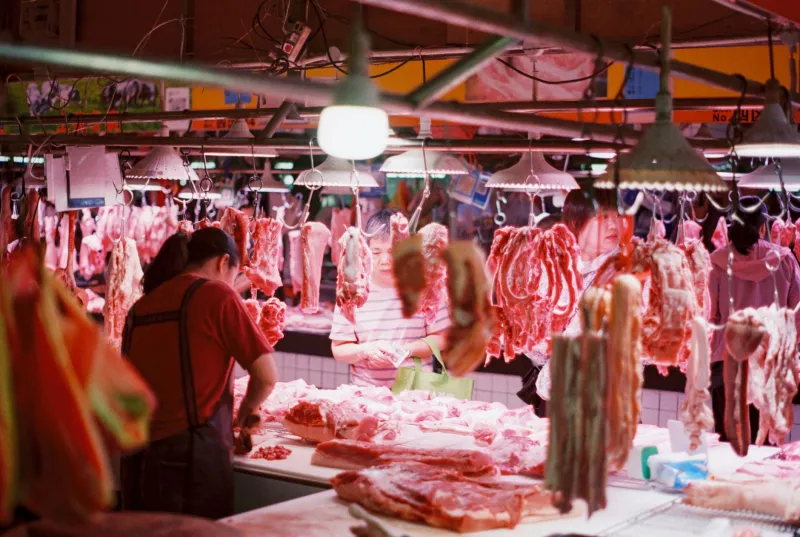
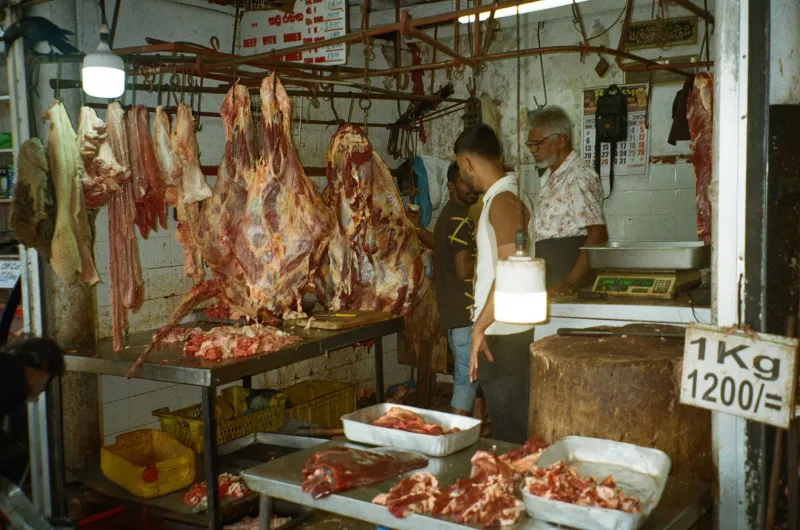
At 4.40am, Smithfield is already a conversation. A lorry door bangs, a trolley rattles and someone calls across the aisle for a shoulder. The reply comes back in Polish. A few bays along, a Portuguese word for brisket is met with a nod and a raised finger, then a Romanian phrase that means, roughly, wait a minute. English is still the common ground, but it is no longer the only language doing the work.
That is not a novelty story. It is a staffing story. Across the market, the people loading, trimming, weighing and serving are increasingly likely to have learned the trade in another country. The old guard are still here, sleeves rolled and memories long, but the next cohort is arriving with different first languages and the same early alarm. The question is how a trade built on shorthand, banter and hard-won knowledge passes from one pair of hands to another when the words do not line up.
The First Word Is 'Shoulder'
Cut names are where most new starters begin. A shoulder is not just a shoulder when you are standing in front of a rail at five in the morning and a customer wants it boned, rolled and tied before six. On the continent, the same animal can be divided and named differently. Polish łopatka, Romanian spată and Portuguese paleta all point roughly to the shoulder, but the trim, the fat cover and the way the joint is presented can vary. A word-for-word translation is not enough.
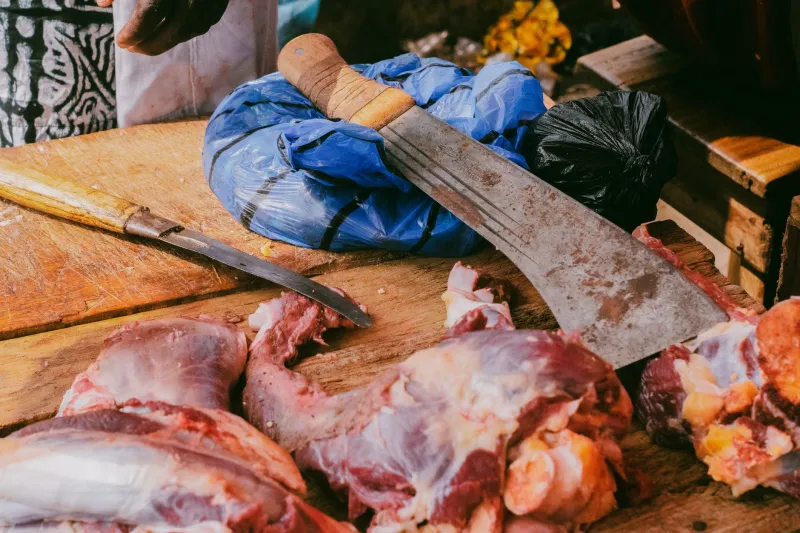
So the teaching happens by pointing, drawing and doing. One trader keeps a laminated crib sheet behind the counter with photographs, English terms and handwritten translations. Another uses coloured labels on boxes. A third simply picks up a knife and says the English word while making the cut, then repeats it until the new starter says it back. It is not glamorous training. It is the same method butchers have always used: watch, copy, repeat, correct.
The health rules need the same treatment. Temperature checks, traceability, cleaning schedules and separation of raw and cooked product are not optional, and they do not become clearer because everyone is in a hurry. The Food Standards Agency's requirements and the City of London Corporation's market rules are written in English, but the training that makes them stick is often visual. Photographs of correct storage. Colour-coded boards. A quick demonstration of where the probe goes and why the number is written down. The paperwork is English; the understanding is built in the aisle.
Banter Is the Last Exam
If cut names are the first lesson, counter banter is the last. Smithfield has its own rhythm of jokes, nicknames and half-finished sentences. A new starter can spend weeks knowing exactly what a customer wants and still miss the tone. Is that comment a warning or a wind-up? Does 'same as last week' mean the usual order or the usual argument about the usual order?
Traders say the ice breaks in small ways. Someone mispronounces a cut and everyone laughs, including the person who said it. Someone else brings in a cake from a bakery near Farringdon and becomes part of the team. The language of tea, cold hands and late lorries does not need translating. Neither does the look exchanged when a delivery is short or a customer changes their mind at the last minute.
There is a practical side to this, too. Mixed-language teams develop their own shorthand. A Polish term might become the default word for a particular trim because it is shorter. A Portuguese phrase might stick because it is funnier. English remains the language of the paperwork, the customer and the market notice, but the counter develops a dialect of its own. That is not a threat to Smithfield's heritage. It is how the heritage has always worked: absorbing new people, new words and new ways of doing the same old jobs.
The Paperwork Speaks English
The harder edge is recruitment. Butchery and market work are physically demanding, and the hours are not for everyone. Employers need staff who can start safely, understand hygiene rules and stay long enough to become useful. Language support is part of that. Some businesses pair new starters with a more experienced colleague who speaks the same language. Others use translated induction sheets or send staff on English courses. None of it is a substitute for time at the block, but it helps.
The traders training this new cohort are clear about one thing: the trade is carried by hand and mouth together. You can learn the names from a sheet, but you learn the feel of a cut by doing it. You can read a hygiene rule, but you learn why it matters when a delivery arrives warm or a probe goes missing. The language changes; the standard does not.
A Trade That Keeps Translating Itself
By 2026, Smithfield's workforce looks different from the one many older traders joined. That is true of London more broadly, and it is true of the meat trade. The market's future depends on whether it can keep teaching the old trade to new hands, in whatever language they arrive with.
At one counter, a new starter is now confident enough to take a phone order in English, check it in Polish with a colleague and hand over the right box without breaking stride. The customer never knows about the translation. They just know the order is right. That is the point. The counter in several languages is still a Smithfield counter: sharp knives, early starts and a trade that has to be learned one cut at a time.