The Market Had Its Own Words: A Working Glossary of Smithfield Slang
Every closed trade builds a wall of words, and Smithfield built one of the thickest in London. Walk through the market at five in the morning in its pomp and you would hear a language that was technically English but practically a code: prices called in shorthand, jobs described in words no dictionary admitted to, whole categories of men defined by a single syllable.
This is a walk through that vocabulary, stand by stand and letter by letter. Some of it is well documented. Some of it rests on the memory of men who worked the floor, and memories differ. Where the accounts disagree, this piece says so.
Why the language was private
The London meat trade was a closed shop with a strong sense of itself, and its language did two jobs at once. It sped things up — a word is faster than a sentence when you are moving a hundred carcases before dawn — and it kept people out. A customer who did not know what a bummaree was could not argue with one.
Much of the slang has gone with the men who used it. What survives sits in oral-history recordings, in a handful of trade memoirs and in the memories of the porters and salesmen still working the City. That is the fragile bit: a glossary like this is not really about etymology, it is about how much of a working culture can be recovered from the words it left behind.
A is for the Avenue
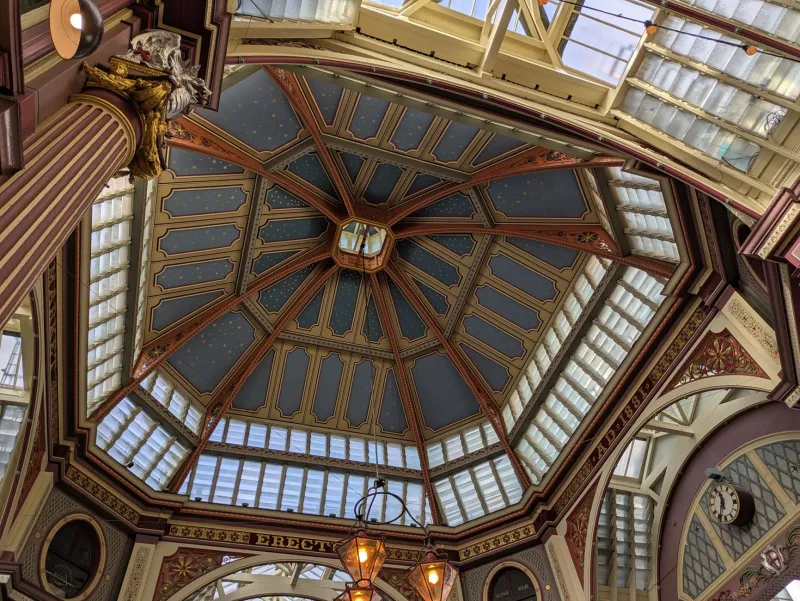
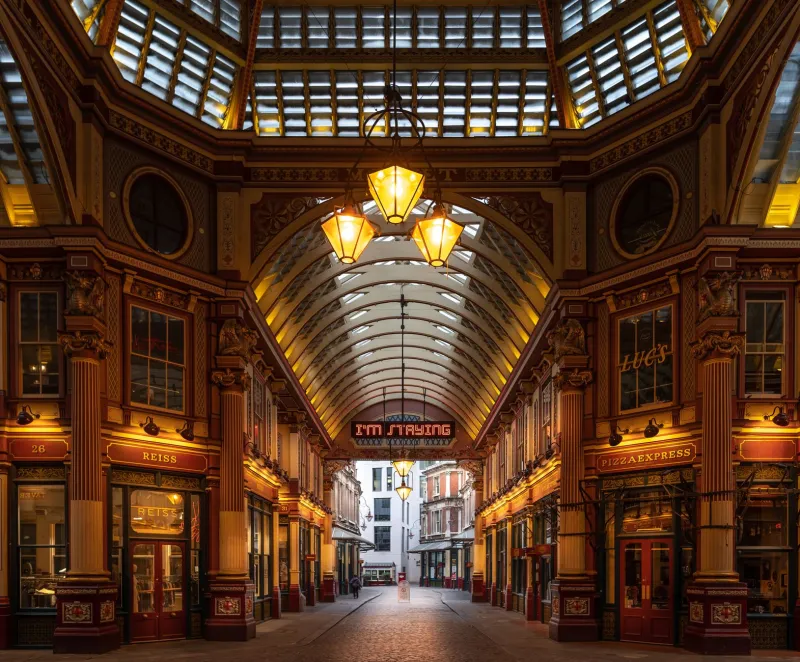
The Grand Avenue is the spine of the market building, and it stays capitalised in the speech of anyone who worked there. To be 'up the Avenue' was to be at the centre of things. Porters did not say 'in the market' if they could say something more specific — the Avenue, the pit, the rails, the drops. Place names were part of the job.
B is for bummaree
The best-known word in the lexicon, and the one most often mangled. A bummaree — also spelled bumaree — was a dealer who bought on the market floor and sold on, a middleman working between the salesman's stand and the smaller buyer. Not a porter, not a salesman, but a licensed presence with his own pitch and his own reputation.
The word attracted snobbery from both directions; the old joke was that a bummaree bought a pig and sold the squeak. But the function was real. Small butchers, caterers and shopkeepers who could not fill a lorry needed someone to break bulk, and the bummarees did it.
B is also for bobber
Here the record is thinner, and honest glossaries should say so. 'Bobber' is remembered by old hands as a floor term for a man who dealt in small lots or who 'bobbed' around the stands picking up odds and ends, and some accounts link it to the bob — a shilling — as in a small-money man. Others insist it meant something narrower and now unrecoverable. Take your pick. The useful point is that the trade had layers of small operators, and it named every one of them.
C is for chalking up and the call
Prices went on carcases in chalk, and 'chalking up' meant putting the figure where a buyer could see it and a salesman could defend it. Alongside it ran the call — the chant of the auctioneer and the shouted bid across the Avenue. Anyone who has heard a livestock auction will recognise the rhythm; in Smithfield it was compressed, fast and utterly unsentimental.
D is for drop and the dry trade
A drop was a delivery point, and 'on the drop' meant waiting for a consignment that might be late, short or wrong. The trade also split the world into wet and dry. Wet meant meat that would not keep — the fresh carcase trade, the part of the business driven by cold, speed and the clock. Dry meant the rest: cured, salted, smoked, tinned, the goods that could sit.
F is for the fifth quarter
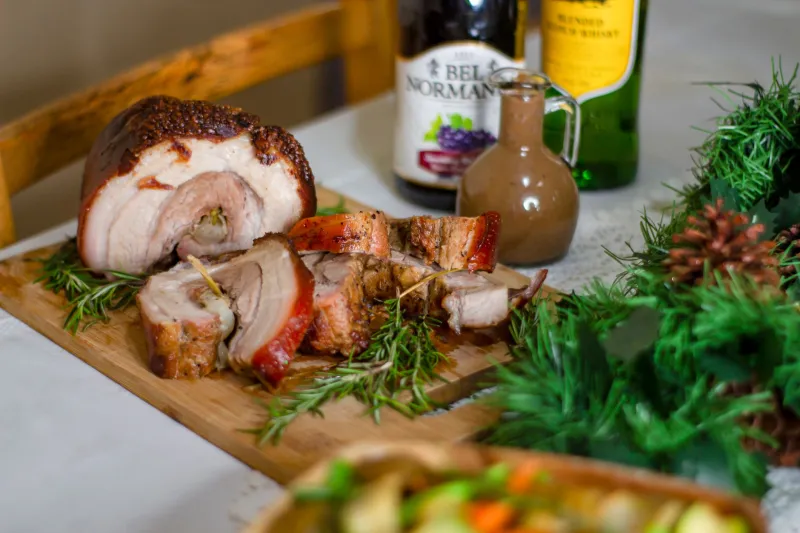
The proper trade term for everything that is not the four quarters of the animal. Offal, tongues, heads, feet, fat, bones, hides. It is the most useful phrase in the whole glossary, because it reframes what a modern shopper calls 'offcuts' as a category with its own value, its own buyers and its own prices. When a butcher today says they are 'using the whole beast', they are describing something the market did as standard.
P is for pitch, porter and the badge
A pitch was a stand, a position, a right — something inherited, traded and fiercely defended. Porters wore badges, carried the meat on their shoulders or on barrows, and were the physical engine of the place. The bummarees had pitches, the salesmen had stands, and both were worth money.
S is for shambles
The old word for a slaughter floor, and the origin of the street name that still runs by the market. It has softened in modern English to mean mess, but in Smithfield it was simply the workplace. It is a reminder that the market's geography and its vocabulary were once the same thing.
T is for tally
Counting was the whole game. A tally was the record of what had moved and what was owed, and the tallyman was the person who kept it straight in a trade where a carcase could change hands twice before lunch. In a world before screens, the tally was the ledger, the receipt and the argument.
What the words tell us
Read the list again and a picture of the old market forms: a pyramid of small operators, a rigid geography of stands and pitches, a culture that priced everything and wasted nothing, and a language built for speed and exclusion.
That world has shrunk. The trade that once filled the halls has thinned, and the men who spoke this shorthand are fewer each year. Which is why the words matter now, and why they are worth writing down while someone still remembers what a bummaree shouted across the Avenue at four in the morning.