Geese, Game and a Baron of Beef: What Smithfield Ate Before Turkey Took Over
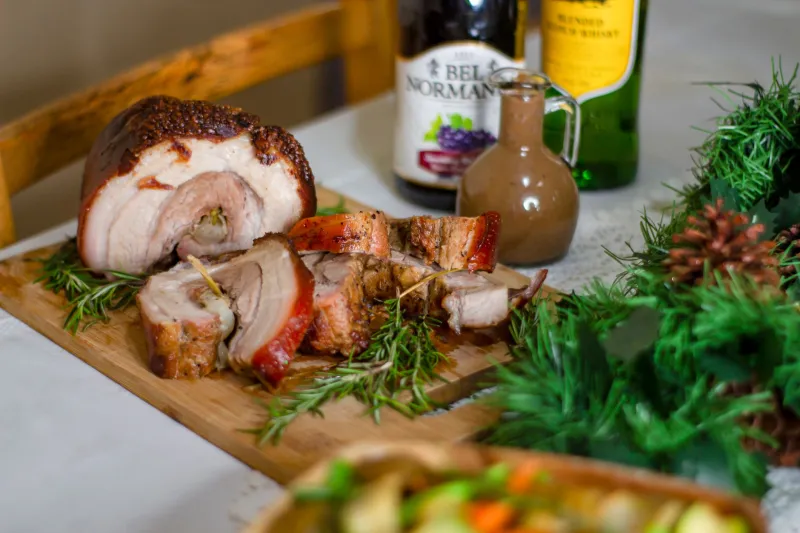
Walk through the City in mid-December and the Christmas story is already written: birds in boxes, birds in brine, birds in the boot of the car. But the turkey is a newcomer to this island's festive table, and a fairly pushy one at that. For most of Smithfield's long history, Christmas meat meant something else entirely — something with feathers, fur or a frankly intimidating amount of bone.
The show before the shopping
For nearly two centuries, December at Smithfield meant the fatstock show. The Smithfield Club, founded in 1798, staged its Christmas exhibition of prime livestock in the market buildings, and the whole point was spectacle. Breeders brought out animals in condition that no ordinary farm could justify — bullocks with backs like dining tables, sheep brushed to a sheen, pigs fattened to a width that seems almost rude today.
Those shows tell you what the trade valued: size, finish, and the confidence to present a carcase as a piece of craft. It was a meat trade Christmas, not a supermarket one. The buying public came to look, the butchers came to compare, and the prizewinners went on to be carved in front of people who would talk about it for years.
The goose that lost the argument
Before turkey, the bird at the centre of a well-off London Christmas was usually a goose. Michaelmas goose on 29 September was the older fixture, but the Christmas goose held its own for centuries, and the trade around it was formidable.
Geese were driven to London on foot from the eastern counties. Accounts of the trade describe birds walked in stages along the old roads, their feet treated to survive the journey — tarred, or in some tellings shod in tiny leather boots. Whether or not every bird wore footwear, the point stands: the goose arrived in the capital as livestock, was sold live, and was killed close to the kitchen. Smithfield was where much of that traffic ended.
Goose lost ground for unromantic reasons. It is fattier, more awkward to roast for a crowd, and less forgiving of a cook who is distracted by guests. Turkey, once the preserve of the wealthy, became cheap enough to be ordinary. By the twentieth century the bird from the Americas had taken the crown, and the goose was demoted to a nostalgia item — which is roughly where it sits now, despite being, to my mind, the better eat.
Beef, game and the fifth quarter
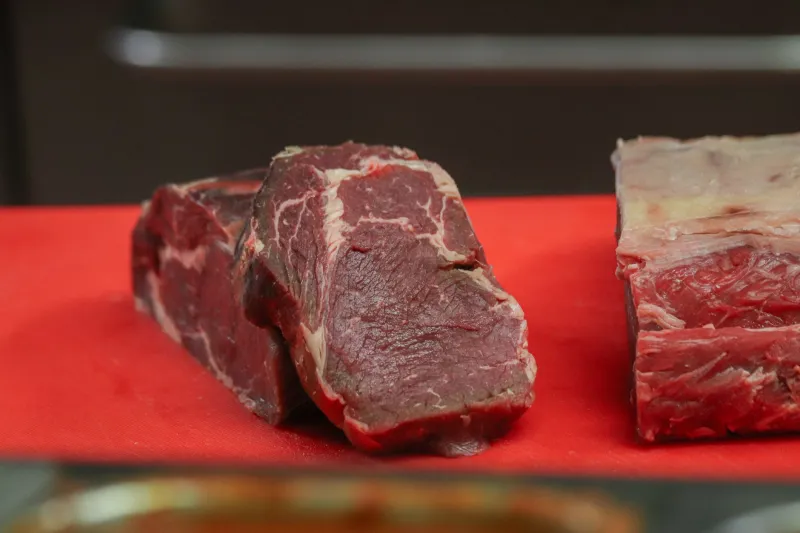
A Victorian Christmas table could be a genuinely carnivorous affair. The baron of beef — a great double sirloin, sometimes roasted whole — was the centrepiece of grander houses, and a standing joke about excess in others. Ribs on the bone, salted and hung, were the reliable option for households that could not run to a bird at all.
Then there was game. Pheasant, partridge, hare, venison and woodcock came into the market in season, and December was peak. Game is where a nose-to-tail Christmas really shows itself, because the trade in it never pretended the animal was tidy. Hares came in fur; birds came with heads and feet; the offal went out through the same doors and onto the same slabs as the prime cuts.
The old trade word for it was the fifth quarter — everything that was not the four quarters of the carcase. Lights, kidneys, sweetbreads, tongue, skirt, bones for stock, fat for rendering. In a market that dealt in whole animals, nothing was a by-product. It was all meat, priced and sold.
Why turkey won, and why it may not keep winning
The turkey's victory is a story about scale. Norfolk Black and similar birds were driven to London in huge flocks in the eighteenth and nineteenth centuries, and the journey itself became part of the folklore of the trade. Cheaper rearing, cheaper transport and the rise of the oven-ready bird finished the job.
But the last few years have nudged things back. Small flocks, breed conservation and the plain fact that a goose or a forequarter of beef feeds a table better than a dry turkey breast have all gained ground. Butchery counters talk up the alternatives, and cooks who have tried a slow-roasted shoulder of mutton on Christmas Eve rarely go back.
Where to source it in London now
The good news for anyone in the City is that these older meats never fully left. Borough Market remains the obvious first stop: Wyndham House Poultry for game and birds, Hill & Szlachcic for beef and mutton, and the surrounding produce stalls for the rest. Lidgate's in Holland Park is a proper old-school butcher with a serious Christmas order book, and The Ginger Pig and Turner & George both do geese, capons and aged beef to order.
Goose needs ordering early — most butchers want a week or two of notice, and the good birds go first. Game dealers will have pheasant and hare through December, though venison is often farmed rather than wild this late in the season, so ask. For the fifth quarter, go in person and ask what is in the cold room; sweetbreads and tongue rarely make it to a website.
A nose-to-tail Christmas in the City
What would a genuinely Smithfield-minded Christmas look like in 2026? Probably not a single trophy bird. More likely a smaller centrepiece and more of everything else: a goose for six, a rib of beef hung properly, a brawn made in November from a pig's head, a terrine of pheasant and pork, stock simmered from the bones of whatever was roasted last.
That is the old logic of the market, and it survives better than the language does. Buy the whole animal, use the whole animal, and let the butcher know you are serious. It is also, conveniently, cheaper than chasing the perfect turkey — and it tastes more like Christmas than anything that arrives in a box.