Pinafores, Ledgers and Lock-Ups: The Women Who Ran Smithfield's Counters
There is a version of Smithfield that gets told again and again. Porters with their hooks. Salesmen with their pens. Lorries reversing into the loading bays while the City sleeps. It is a fine version. It is also, at best, half of one.
Women have worked this market since the first slabs went down — behind counters, in offices, in cold rooms, in the books. You will not find many of them on the plaques.
What the directories actually list
Pull down a run of Kelly's or the old Post Office directories for the streets around Smithfield and read the wholesale meat entries slowly. Between the firm names you find the other entries: a title, a surname, a trade. Some are shopkeepers. Some are wholesalers' agents. A few are listed as saleswoman or manageress, which in a trade where a single counter was often a family's entire fortune was a job title worth taking seriously.
Directories are blunt instruments, so they undercount. They miss the women working inside a firm that carried a husband's or a father's name above the door. They miss the ones who answered the phone, priced the rail and did the payroll, and who would have described themselves as helping out.
The buildings, the firms, the families
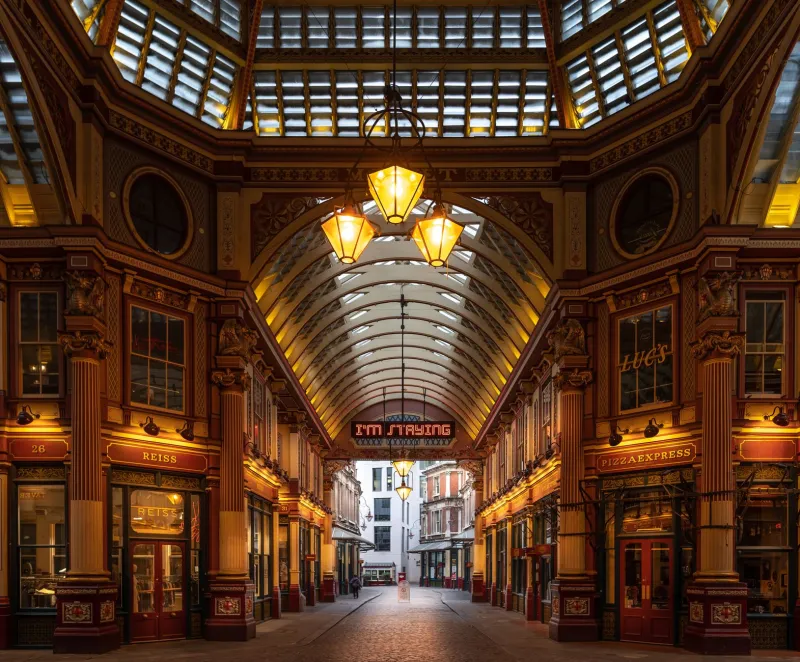
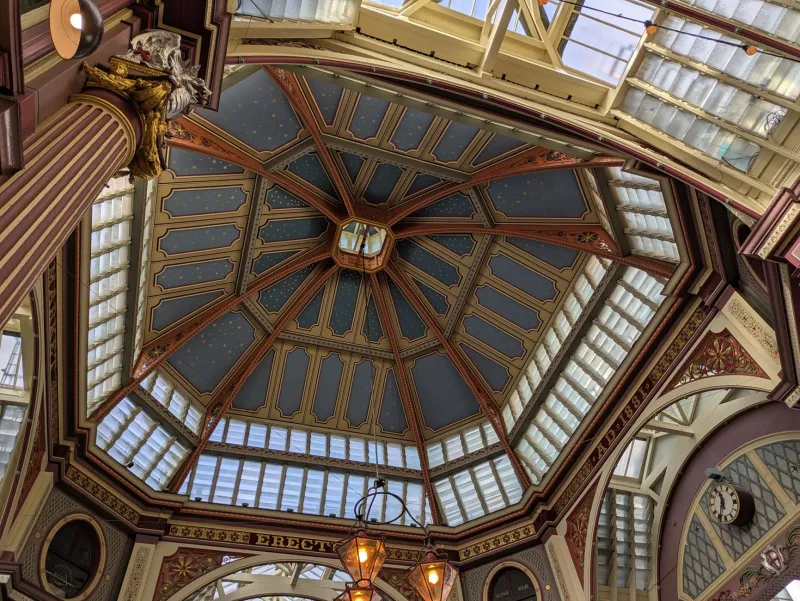
Horace Jones's market buildings went up from 1868 — the Central Market first, the poultry and provision halls following — and they formalised something that had been done in the open air for centuries. They also hardened the line between a pitch and a firm, between the people who paid rent for a stall and the people who ran the money behind it.
Meat was a trade built out of family capital, and family capital has never cared much who signs the cheques. A widow could keep a business alive; a daughter could take over a counter. The institutions around the market were slower. The livery companies and trade bodies were men's clubs well into living memory, and the market's own administrative language — tradesman, porter, salesman — quietly wrote women out of the paperwork even while they were standing in the room.
War, rationing and the paperwork
The two wars are where the record gets loudest, because that is when the country started counting who did what.
During the First World War, with men away, women moved onto the counters and into the offices in numbers the trade press could not ignore. The Second World War brought control in wholesale. Meat rationing began in 1940 and ran, in one form or another, into the mid-1950s. Prices were fixed, allocations calculated, forms filed. The market did not stop being a market; it became a market with a paper trail, and a great deal of that paper was pushed by women.
The raids of 1940–41 hit Smithfield hard, and firms that survived did it on improvisation: temporary premises, borrowed rails, ledgers carried between sites. Look at photographs from that period and you see the overalls and the sensible shoes standing in what had been a shop floor.
Heavy work, and who was allowed to do it
Then there is the part the sentimental version leaves out. Market work is physical. Barrows, quarters of beef, cold rooms at four in the morning. Women did it — but the organised end of the trade pushed back for a long time, arguing over whether heavy handling was women's work at all and, less high-mindedly, over pay.
Change came slowly and then in a rush: equal pay legislation in 1970, the Sex Discrimination Act in 1975, and, as important as either, a generation of women who stopped asking permission. Today's market has women running wholesale firms, cutting rooms, sales desks and compliance — and the fact that this still gets written up as a novelty tells you something about how the history has been kept.
Where the story goes quiet
The gaps are not accidents. Oral-history projects tend to record the people who stayed, who joined the trade association, who were willing to sit down in front of a microphone — and that has skewed male. House histories are written from the minutes, and the minutes record who was entitled to speak. Photographs get captioned by whoever kept the album.
So the women of Smithfield survive mostly in the margins: a hand resting on a ledger, a figure at the back of a group shot, a directory entry with a title instead of a first name.
How to go looking
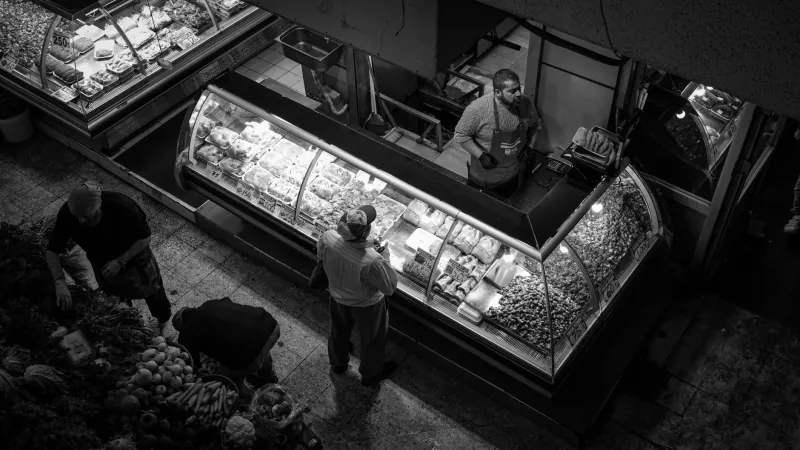
If you want to do the digging yourself, start with the trade press. The Meat Trades Journal ran for decades and its pages are full of the small print of the business — appointments, retirements, shop openings, obituaries. Then the directories, then the City and borough archives, then the photographic collections. And when you find a picture of a counter, look at who is behind it rather than who is in front.
Why it matters now
With the meat trade's future in this corner of the City under constant discussion, the question of who built it is not a decorative add-on. A market that moves on without recording the women who ran its counters hands the next generation a history that is neat, heroic and wrong. The pinafores deserve better than a footnote.