Paper Before Protein: The Quiet Checks That Keep Smithfield's Meat Moving
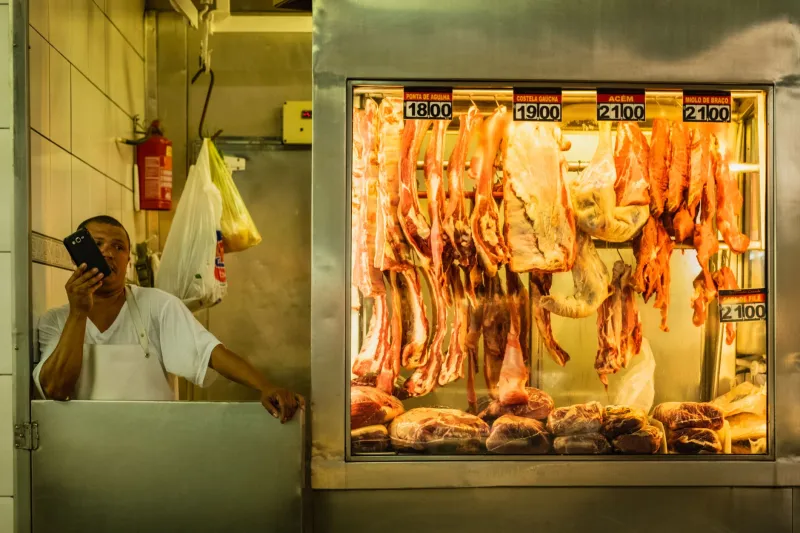
At three in the morning, Smithfield looks like a place built entirely of muscle. Rails rattle, crates scrape, fridges hum and voices cut through the cold. But alongside all that movement runs a quieter system: paperwork. It is not glamorous. It rarely makes the photographs. Yet it is one of the reasons a chef can ring a trader, ask where a piece of beef came from, and get a proper answer rather than a shrug.
Smithfield is a working meat market, owned and managed by the City of London Corporation. That means the theatre of the trading floor sits inside a framework of licences, hygiene rules, inspections and traceability. Some of it is written down in regulations and market bye-laws. Some of it lives in habit, reputation and the unspoken code of people who have spent decades in the same trade. The two are not separate. They lean on each other.
The first check is a document
Meat does not simply turn up at Smithfield. It arrives from approved premises, carrying the right marks and accompanied by records that show where it has been and how it has been kept. The cold chain is not a slogan; it is a chain of evidence. Temperatures, dates, suppliers, consignments — all of it has to line up before anyone starts talking about price.
The City of London Corporation's environmental health and port health teams have a role in policing that chain, alongside the market's own management. Officers can ask for paperwork, check labels, look at temperature records and inspect premises. The point is not to catch people out for the sake of it. The point is to make sure that when a buyer hands over money, they are buying what the label says they are buying.
In a market like Smithfield, that matters commercially as much as legally. A restaurant's reputation can rest on one delivery. A butcher's name is built over years and lost in a morning. The paper trail is what allows trust to travel beyond the handshake.
Stamps, labels and the language of assurance
A health mark is not decoration. Nor is a label a piece of design. They are part of a language of assurance that stretches from the farm and the cutting room to the counter and the kitchen. Origin, approval numbers, storage conditions, use-by dates: each detail answers a question someone might later need to ask.
For the men and women on the floor, this is everyday stuff. They know which documents should be there and which look wrong. They know when a delivery feels off before the probe confirms it. That knowledge is not a substitute for regulation. It is what regulation looks like when it has been absorbed into a working culture.
The floor is the second office
Walk through the market and you will see the physical checks that sit alongside the paper ones. Knives and aprons. Washbasins and boot washers. Crates kept off the floor. Surfaces cleaned down. Pest control records tucked away in a folder. A clipboard at four in the morning can say more than a raised voice.
Hygiene inspections are not a visit from outside life. They are part of the rhythm. Traders expect them. Staff prepare for them. The good ones are not offended by a question about cleaning schedules or temperature logs; they are irritated only when the answer is not ready. In a market dealing in raw meat, the details are the business.
There is also the question of waste and offcuts, the bits that do not make the display. They are not exempt from the rules. They have their own routes, their own records and their own reasons for being kept separate. Regulation follows the meat all the way through the building, not just the showpieces.
The unwritten code
The formal system sets the floor. The unwritten code raises the ceiling. Smithfield runs on reputation as much as inspection. If you sell something questionable, word travels faster than any notice. If you misdescribe a cut, people remember. If you help a neighbour out at the end of a hard shift, they remember that too.
That culture is not a replacement for officers, licences or bye-laws. It is what makes them workable. A market where everyone is trying to game the rules becomes exhausting to police. A market where most people want the rules to mean something is easier to keep honest.
In 2026, Smithfield is still a working wholesale market, and the paperwork still matters. The debate about its long-term future comes and goes, but the daily checks do not. They are part of what makes the place a market rather than a set of pretty buildings.
Why the rule book matters after the last lorry
By mid-morning, the heaviest work is done. The rails are quieter. The last lorries pull away. The paper trail remains: invoices, records, inspection notes, labels, stamps. It is not the part of Smithfield that people come to see. But it is the part that lets the rest of it function.
A meat market is a promise as much as a place. The promise is that what is on the hook is what it says it is, that it has been kept properly and that someone can be held to account if it has not. Smithfield's rules, licences and inspections are how that promise is kept. The handshake is how it is made.