The Steak That Remembers Smithfield: One Cut’s Journey from Rail to Plate
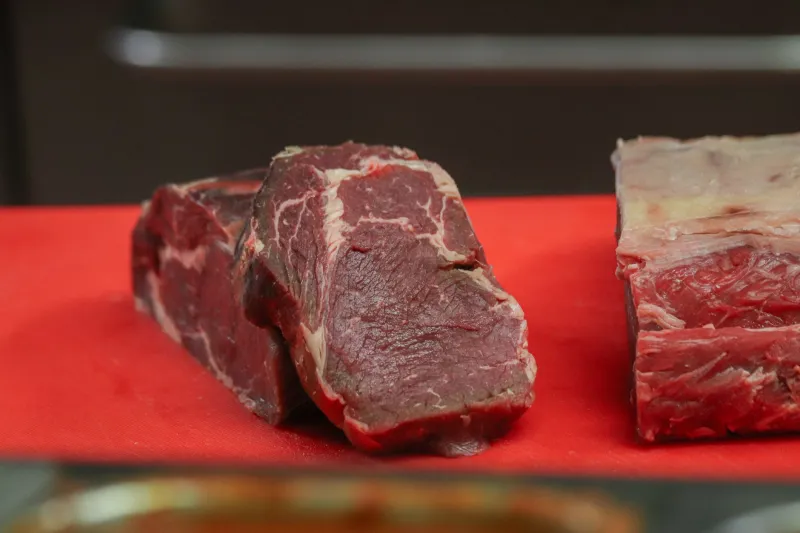
The steak starts as a dark shape on a stainless rail, not as a menu item. At 5.40am on Charterhouse Street, the market is already doing the quiet, heavy work that the City rarely sees. Forklifts reverse. Crates knock. A butcher in a white coat moves a whole rump cap onto the block, trims a corner, and steps back to look at it the way a carpenter looks at a length of timber.
This is not a famous cut in the way a dry-aged sirloin is famous. It is a working cut with a good fat cap and a grain that rewards a sharp knife. In a Smithfield trader’s hands, it is also a piece of information: breed, farm, feed, age, how it has been hung, how it will behave on a grill. The trader does not just sell it. He reads it.
Before the City Wakes
Smithfield has always been a market of early decisions. Long before the offices open and the coffee machines switch on, meat is being graded, priced, cut and moved. The trade here is not a heritage exhibit, although the buildings and the language can make it feel like one. It is a working supply chain with centuries of habit behind it.
The rump cap I followed was destined for a small restaurant kitchen off St John Street, no more than fifteen minutes away by van. That short distance is the point. Smithfield’s influence does not stop at the market boundary. It travels in chiller boxes through Clerkenwell, into basements, up service lifts and onto hot plates.
The Block and the Blade
On the block, the trader works quickly but not carelessly. He squares off the cut, checks the fat, and talks about the farm without consulting a screen. The relationship matters. A chef can ask for a particular breed or a longer hang, but the trader’s judgement is what turns a request into a usable piece of meat.
That judgement is part of the market’s heritage. It is also the bit that is hardest to replace. Anyone can buy beef. Not everyone can look at a whole cut and know how many steaks it will yield, which end will eat best, and whether it needs another week in the ageing room or should go out today.
The Quiet Work of Ageing
The cut spends time in a cold room before it reaches the kitchen. Dry-ageing is often sold as a flavour story, but in practice it is a control story: temperature, air movement, humidity, time. Too little and the meat is tight. Too much and you lose yield and end up with a crust that has to be trimmed away.
The trader checks it the way he checks everything else, by eye and by hand. The kitchen will later trim it again, portion it, salt it and let it come up to temperature. By the time it hits the grill, the steak has passed through several pairs of hands. None of them are famous. All of them matter.
Through the Barriers
The delivery is unglamorous. A van, a tail lift, a chiller box, a back door propped open with a crate. London’s food geography is often described through restaurants, but it is held together by routes like this one: market to kitchen, wholesaler to counter, trader to chef.
In the kitchen, the chef does not talk about Smithfield as a tourist site. He talks about it as a supplier. He knows which days are busy, which cuts are reliable, and which trader will ring him if something is better than expected. That is a relationship, not a transaction.
The Hot Plate
On the grill, the rump cap moves fast. The fat renders. The crust forms. The chef rests it, slices against the grain, and sends it out with something sharp and something green. It is a simple plate. The complexity is all behind it.
This is where the where-to-eat-well angle comes in. The best steak in London is not always in the most expensive room. It is often in places that know their supplier, cook a cut properly and do not smother it. Look for menus that name the farm or the breed. Ask where the meat comes from. A good kitchen will not mind. A great one will enjoy the question.
Why the Route Matters
The future of Smithfield’s meat traders is uncertain. That argument is usually made in planning terms: jobs, lorries, heritage, the cost of moving. But there is a smaller, more edible argument too. If the traders go, the route changes. The short runs, the early calls, the ability to ask for a particular cut and get it the same morning — those things do not simply relocate intact.
A steak on a plate can look like the end of a supply chain. Really, it is a record of one. At Smithfield, that record is still being written, one early morning and one rump cap at a time.